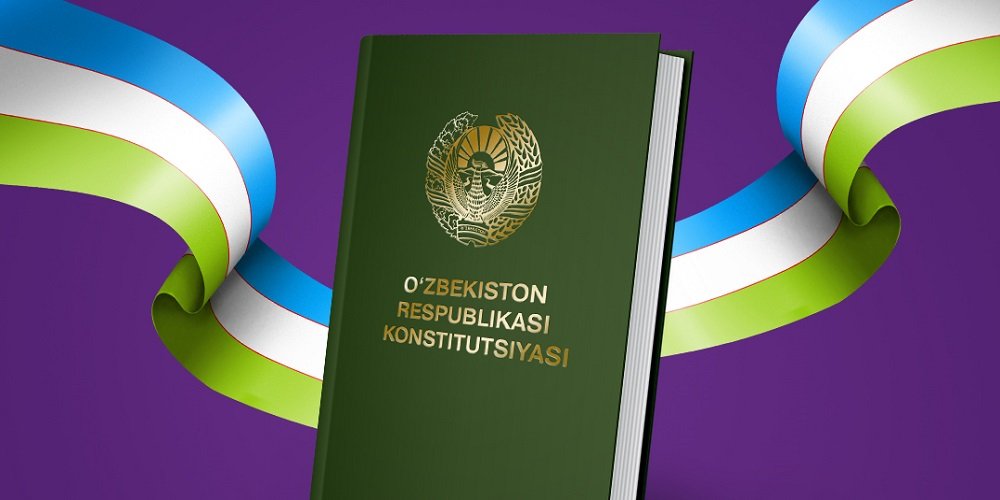
Constitution Day in Uzbekistan, observed annually on December 8, is a national public holiday that commemorates the adoption of the country’s Constitution in 1992.
This day marks a pivotal moment in Uzbekistan’s post-Soviet history, symbolizing the establishment of a sovereign democratic republic and the foundation for its legal and political framework.
As Uzbekistan’s supreme law, the Constitution enshrines principles of human rights, state sovereignty, and democratic governance, serving as a guiding document for the nation’s development. Celebrated with patriotic fervor across the country, it reminds citizens of their rights, duties, and the shared values that underpin Uzbek society.
The roots of Uzbekistan’s modern constitution trace back to the dissolution of the Soviet Union and the country’s declaration of independence in 1991.
Prior to 1992, Uzbekistan operated under the 1978 Constitution of the Uzbek Soviet Socialist Republic, which was heavily influenced by Soviet ideology. The need for a new foundational document arose to reflect Uzbekistan’s newfound sovereignty and aspirations for democracy.
The drafting process began shortly after independence, involving a Constitutional Commission that worked for approximately 2.5 years. This commission included a working group of 32 specialists and six additional groups comprising around 50 people each. The draft incorporated Uzbekistan’s national legal heritage, international human rights standards from organizations like the UN and OSCE, and experiences from foreign constitutions.
Extensive public discussions led to about 80 changes before finalization. On December 8, 1992, during the 11th session of the Supreme Council of Uzbekistan (the precursor to the current parliament), the Constitution was officially adopted.
This event replaced the outdated Soviet-era document and laid the groundwork for Uzbekistan’s political independence. The first Constitution of Uzbekistan as an independent state, however, has historical precedents; an earlier version was adopted in 1927 during the Soviet period.
The 1992 Constitution declared Uzbekistan a “sovereign democratic republic” in which “the people are the sole source of state power.”
Its preamble invokes the centuries-old dream of freedom and statehood, referencing the legacy of Amir Timur and the Jadid reformist movement of the early 20th century.
Structured in six sections and 128 articles, the document established a presidential system with a clear separation of legislative, executive, and judicial powers.
It proclaimed the supremacy of the Constitution over all other laws, introduced a market-oriented economy, guaranteed private property, and enshrined a broad catalogue of human rights, freedom of speech, conscience, assembly, movement, and protection from torture or arbitrary arrest.
Article 18 boldly states that “all citizens of the Republic of Uzbekistan shall have equal rights and freedoms and shall be equal before the law, without discrimination by sex, race, nationality, language, religion, social origin, convictions, personal or social status.”
Over the years, the Constitution has been amended several times to reflect changing realities. Minor changes occurred in 1993, 2003, 2008, and 2011, mostly extending presidential powers or adjusting electoral rules.
The most far-reaching transformation, however, came on April 30, 2023, when 90.21 % of voters in a nationwide referendum approved a thoroughly revised version.
The new edition expanded the document from 128 to 155 articles and from 275 to 334 norms. More positively, the amendments elevated human dignity to the highest constitutional value, introduced stronger social guarantees (free kindergarten, housing support for certain categories), abolished the death penalty definitively, strengthened environmental protections, and expanded the powers of parliament and local councils.
Celebrations of Constitution Day have evolved alongside these reforms. In the early 1990s the holiday was modest, marked mainly by official ceremonies and the laying of flowers at the Monument to Independence.
By the 2000s it had grown into a colourful spectacle. Infact with the new leadership especially under the current President Shavkat Mirziyoyev the celebrations have become transformed.
Today, the morning of December 8 begins with the national anthem broadcast across the country and a televised address by the president from the grand hall of the Oliy Majlis.
In Tashkent’s Independence Square, thousands gather for a military parade and open-air concerts.
In Samarkand, the Registan glows with light shows projecting constitutional articles onto the ancient madrasahs; in Khiva, children in traditional atlas dresses recite poetry about justice and freedom.
One of the most moving traditions is the presidential decree issued every Constitution Day granting amnesty or sentence reductions to hundreds, sometimes thousands , of convicts who have demonstrated sincere repentance.
In 2024, for example, President Mirziyoyev pardoned 658 prisoners, including 270 who returned home immediately. This act of mercy is seen as embodying Article 93’s spirit of humanism.
For ordinary Uzbeks, December 8 is both festive and reflective. Families gather for plov and holiday sweets, children receive small gifts, and elderly grandparents recount stories of life before independence.
The day reminds citizens that the Constitution is not an abstract text locked in a glass case but a living instrument that touches everyday life, from the right to a fair trial to the guarantee of free secondary and vocational education.
In an increasingly complex world, Uzbekistan’s Constitution Day serves as an annual reaffirmation of national sovereignty, multi-ethnic harmony, and the dream of building a democratic society rooted in Central Asian values.
As President Mirziyoyev said in his 2024 address, “Our Constitution is the legal foundation of New Uzbekistan, a state where the interests of the human being stand above everything else.
December 8 serves as an annual reminder of Uzbekistan’s hard-won independence and the shared responsibility to uphold the rule of law.
For the people of Uzbekistan, the Constitution is not merely a legal text stored in archives; it is a living document that continues to shape daily life, protect freedoms, and inspire hope for a prosperous future.
Constitution Day, therefore, is both a celebration of the past and a reaffirmation of the nation’s commitment to democracy, unity, and progress.

Dr. Farhat Asif
The writer is President, Institute of Peace and Diplomatic Studies Riphah International University. The views expressed are her own and do not represent those of the institutions she represents.