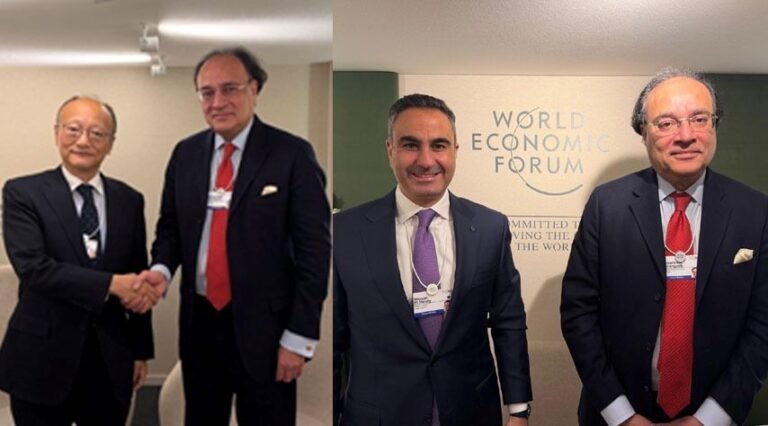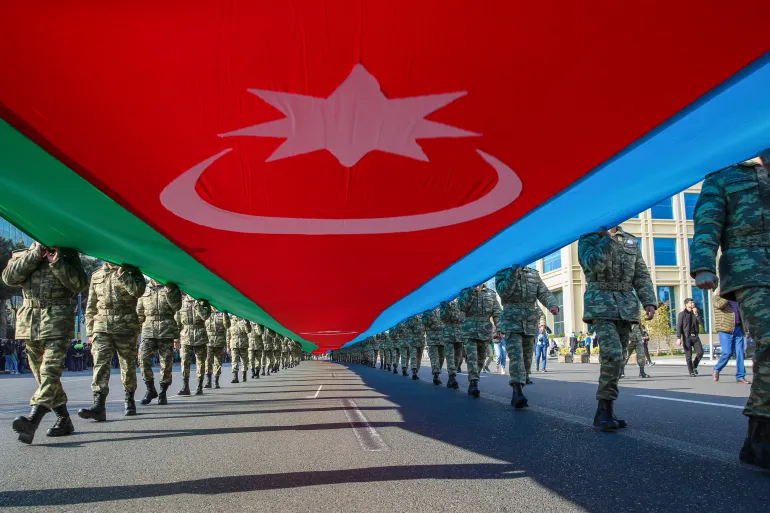
On 2nd October the President of Azerbaijan, Ilham Aliyev, attended the 7th summit of the European Political Community (EPC) held in Copenhagen. This coincided with Azerbaijan’s hosting of the Organization of Turkic States (OTS) summit on 9th October in Gabala and the participation of Azerbaijan’s foreign minister, Jeyhun Bayramov, in the Council of Foreign Ministers of the Commonwealth of Independent States (CIS) in Dushanbe, Tajikistan.
This pattern of diplomatic initiatives signifies Azerbaijan’s growing role in maintaining order and peace in the international arena at a time when wars cover the headlines across the globe.
Over the last decade, the world has witnessed the challenge to liberal hegemony posed by the rise of China and the third world. This challenge, however, came at the cost of destabilizing the once relatively stable international order. Though one might question the fairness of the order imposed by Western institutions, it was, nonetheless, successful in maintaining a semblance of peace. This semblance, today, seems to be the stuff of legend as the once mighty American empire suffers from the crisis of legitimacy abroad and political instability at home. This has left the world more prone to war and conflict.
Though the United States still plays an important role in mediating peace deals between rival nations, one is tempted to ask, for how long can the world count on the US to maintain peace and order around the globe? The decline of the US hegemony suggests that it will not be long before the US loses its bargaining power to influence politics abroad. Gradually, the empty spaces being left behind by the US’ declining role are simultaneously being filled by other actors. Another visible trend is countries themselves taking responsibility for peace in their respective regions instead of waiting for someone from outside to do it for them.
The success of Azerbaijan’s humanist approach to foreign policy and multi-vector diplomacy in maintaining regional peace is one case in point.
Read More: Even Far Away, I Breathe With My Homeland – An Azerbaijani Student’s Reflections on Her Country
Armenia-Azerbaijan Peace Deal
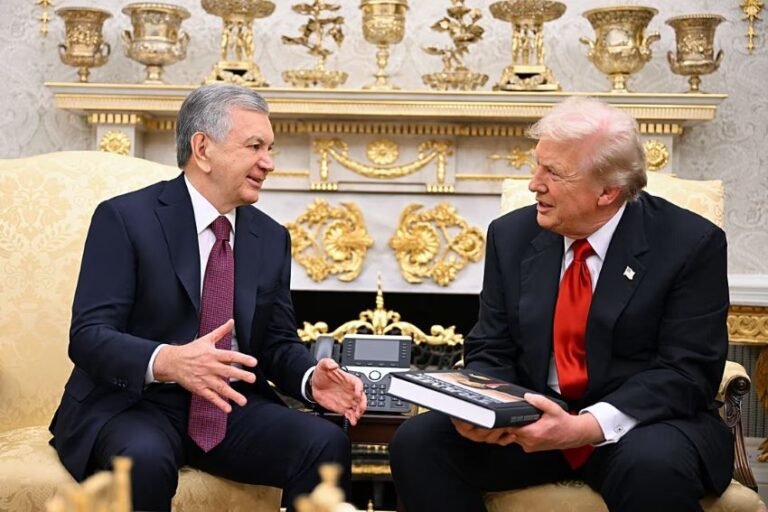
One of the core successes of Azerbaijan’s foreign policy is the recently concluded peace deal with Armenia. Though the US president Donald Trump played a pivotal role in mediating, eventually, it was the willingness of Azerbaijan to cede ground and end the historic Nagorno-Karabakh conflict that led President Ilham Aliyev to negotiate a mutually beneficial deal with his counterpart, the Armenian Prime Minister Nikol Pashinyan.
This peace initiative is set to turn a tumultuous region in the South Caucasus into one of the most important trade hubs of the world.
The importance of this development cannot be underscored enough, as Azerbaijan becomes the bridge that connects Europe with the landlocked states of Central Asia with the signing of the deal. However, the success of the deal owed much to Azerbaijan’s commitment to peace and security in the region. This commitment has translated into a new kind of diplomacy that is antithetical to the zero-sum games that most states play. The success of Azerbaijan in achieving its foreign policy ambitions without creating a security dilemma for its neighbors, therefore, stands as a model for other states to emulate at a time when insecurity is the new normal around the globe.
The Golden Reserve of Europe
These humanist elements of Azerbaijan’s foreign policy have not gone without notice, at least not in the European Union (EU). The common belief in respect for human rights has drawn the EU and Azerbaijan closer, especially since the Russian invasion of Ukraine. Since Putin began his “special military operation” in Ukraine in 2022, Azerbaijan has taken thousands of Ukrainian refugees and sent over $45 million in aid to Ukraine, including humanitarian supplies, energy support, and infrastructure reconstruction. These initiatives have made Azerbaijan ever closer to the EU.
Moreover, since the invasion, Azerbaijan has presented itself as an alternative to Russia for the EU’s energy demands. This has led the Hungarian Prime Minister Victor Orbán to declare Azerbaijan as “the EU’s gold reserve” during the 7th EPC summit held in Copenhagen. The comment signifies Azerbaijan’s growing influence in the EU. This has also led the EU states, and France in particular, to resolve their historical grievances.
In this respect, the Azerbaijan President Ilham Aliyev met the French President Emmanuel Macron, the Italian Prime Minister Georgia Meloni, and the President of the EU Commission Ursula von der Leyen during the summit and agreed on the common agenda of regional peace, energy security, and humanitarianism.
CIS and OTS
Along with engaging in peace deals with Armenia and energy deals with Europe, Azerbaijan is also playing a crucial role in promoting peace agenda in Central Asia via engagement in the Commonwealth of Independent States (CIS) by highlighting its vision for cooperation within the CIS, across economic and humanitarian affairs, and hosting the Organization of Turkic States (OTS) summit in Gabala, where the respective heads of state welcomed the peace deal between Azerbaijan and Armenia and reaffirmed their commitment to advancing the shared vision of a “peaceful, secure, and prosperous Turkic world.”
All these engagements signify that Azerbaijan is, in fact, leading a new era of peace. One that is not based on the hegemonic will of the global superpowers but on the mutual will and respect of all nation states, big and small. The era of peace where the South has to take the responsibility of our security and prosperity in its own hands based on principles of humanitarianism and international law.
Though this era might have seemed like a stretch a decade ago, the case of Azerbaijan suggests that we are, in fact, living it.
Muhammad Omer Rafiq
Muhammad Omer Rafiq is a student of politics with a passion for making sense of our tumultuous political world that always seems to be on the edge. He recently graduated in International Relations from Lahore Garrison University. He can be reached at muhammadomerrafiq@gmail.com