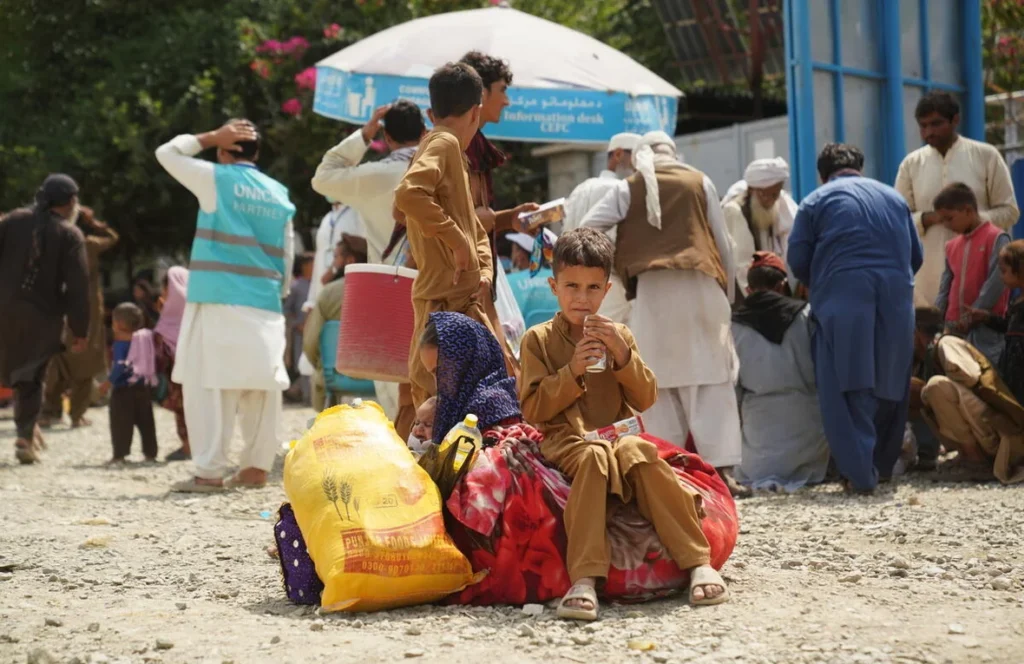
Islamabad (TDI): The United Nations High Commissioner for Refugees (UNHCR) said on Friday that close to 150,000 Afghans have returned to their home country from Pakistan and Iran since the start of 2026.
The figure adds to the 5.4 million Afghans who have gone back from the two neighbouring countries since October 2023.
According to the UN agency, large numbers of Afghans continue to return, in many cases under difficult or involuntary circumstances, placing additional strain on an already fragile Afghanistan. The country is grappling with a worsening humanitarian and human rights environment, especially affecting women and girls, alongside economic instability and recurring natural disasters.
A recent assessment by the World Bank noted that rapid population growth, partly driven by the surge in returns, contributed to a 4 percent decline in GDP per capita in 2025. Aid agencies warn that the pace of arrivals is compounding pressure on limited public services and employment opportunities.
The situation is particularly alarming given the harsh winter conditions, with freezing temperatures and heavy snowfall affecting large parts of the country. UNHCR surveys indicate that just over half of returnees have been able to secure some form of work, mostly informal. Among women, employment levels are significantly lower, with less than one-quarter reporting access to income-generating opportunities.
Read More: UNHCR Hands Over 48 Solar-Powered Public Facilities to Balochistan Government
More than half of returning families lack civil documentation, such as identity papers, which restricts access to essential services. Additionally, over 90 percent are surviving on less than $5 per day, underscoring the depth of poverty facing many households.
UNHCR expressed concern about the long-term sustainability of the returns. While only a small percentage of returnees surveyed indicated they plan to leave again, a larger share reported knowing relatives or community members who had already departed after returning. The agency emphasized that such movements are often driven by necessity rather than choice, as many struggle to rebuild stable livelihoods.
The refugee agency said its priority in 2026 is to support reintegration efforts by providing protection services, housing assistance and livelihood programs, with a special focus on vulnerable groups, particularly women. It highlighted its decades-long presence and operational experience in Afghanistan as a foundation for delivering targeted support.
Together with other UN bodies and humanitarian partners, UNHCR is also monitoring regional developments, noting that access to asylum is shrinking and legal migration pathways are becoming more limited. As a result, some Afghans are resorting to risky onward journeys.
Read More: IYDS Participants Visit UNHCR’s Country Office in Pakistan
The agency reiterated its appeal to countries in the region to uphold the right to seek asylum and ensure that no individual is returned to conditions where their rights and safety could be jeopardized. With Afghanistan’s humanitarian needs mounting and the population increasing rapidly, UNHCR stressed that additional international assistance will be essential in 2026 to help returnees rebuild their lives with dignity and stability.