

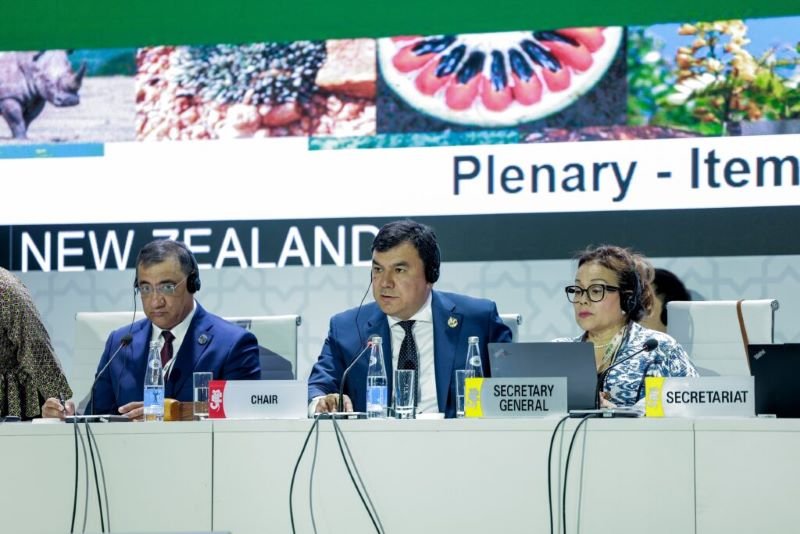
Samarkand (TDI): Nearly 3,000 delegates from around the world are gathering in Samarkand, Uzbekistan, for the 20th meeting of the Conference of the Parties to the Convention on International Trade in Endangered Species of Wild Fauna and Flora (CITES CoP20).
This marks the first time the landmark two-week conference is being held in Central Asia, a region increasingly affected by transcontinental trafficking routes linking Africa and Asia.
Hosted by Uzbekistan’s National Committee on Ecology and Climate Change, CoP20 carries the theme “CITES at 50 in Samarkand: Bridging Nature and People,” commemorating five decades of international conservation efforts and highlighting Samarkand’s historical role as a hub for trade and exchange.
A key focus of this year’s conference is African megafauna, including elephants, rhinos, and giraffes. Several African range states have submitted proposals to allow greater legal trade in these species, sparking debate over the potential impact on vulnerable populations and the risk of increased poaching. Audrey Delsink, Senior Director at Humane World for Animals, described the proposals as “highly concerning” due to their potential to complicate enforcement and drive illegal trade.
One controversial proposal seeks to remove most southern African giraffes from CITES Appendix II. With wild giraffe populations estimated at fewer than 120,000, Delsink warned that fragmented regulations could enable laundering of bones and pelts. Namibia’s plan to sell ivory from registered stockpiles also drew criticism, with experts cautioning that legal trade has historically masked illicit flows and fueled poaching.
Read More: World Wildlife Day 2025: Investing in Conservation
Central Asian nations, increasingly used as transit corridors for wildlife contraband, are playing a critical role in enforcement. This week, Kazakhstan, Kyrgyzstan, Tajikistan, Turkmenistan, and Uzbekistan signed the Samarkand Declaration and Action Plan (2025–2032), committing to harmonized legislation, intelligence sharing, and enhanced customs enforcement. “Intelligence-led operations and rapid information exchange can disrupt organized crime networks exploiting porous borders,” Delsink said.
Community-based conservation strategies are also being highlighted. Delsink noted the value of local initiatives such as beehive fences, chili-based repellents, and ranger programs, which protect wildlife while delivering economic benefits to communities.
Rhinos remain a top concern. On November 29, delegates rejected proposals to relax protections for Southern white and critically endangered black rhinos, maintaining strict safeguards. Marine species also received significant attention: whale sharks, manta rays, devil rays, and gulper sharks were granted stronger protections, with whale sharks and rays added to Appendix I, effectively banning international commercial trade.
Read More: Turkmenistan Joins CITES to Protect Wildlife
“These sharks are victims of a veracious trade,” said Lawrence Chlebeck, Marine Program Manager at Humane World for Animals Australia. “The new protections provide a vital lifeline, and without them, future oceans without these animals is sadly an inevitability.” He emphasized that even landlocked nations like Uzbekistan have a crucial role in regulating trade and enforcing sustainable sourcing standards.
Other agenda items include new protections for vultures, Galápagos land iguanas, and gecko species, as well as ongoing debates over elephant and rhino horn trade, highlighting the complex challenges facing CITES as it seeks to balance conservation with sustainable use


