
During the Cold War, international politics demanded a simple answer to a difficult question: which bloc are you in? Today a growing number of states are asking something else. What can we gain from each relationship without becoming dependent on any one of them?
This is not a return to the non-alignment of the twentieth century, and it is not neutrality. It is a more fluid form of statecraft in which countries cooperate with competing powers in different domains, join different coalitions for different purposes and keep enough diplomatic alternatives to avoid being trapped by any single relationship.
Its name is strategic autonomy, and its rise suggests that great-power rivalry may be creating more room to maneuver for states once expected to choose a side.
The Cold War made alignment relatively legible. States sat broadly within Western or Soviet spheres, and the Non-Aligned Movement offered a political identity to countries unwilling to join either. The contemporary landscape is messier.
A country can be a security partner of Washington, an economic partner of Beijing, an energy partner of Moscow and a diplomatic partner of states that oppose all three. That is not necessarily a contradiction. Economic, security and diplomatic relationships no longer have to move together.
Soon-Ok Shin, Chris Alden and Richard Higgott argue that middle powers are recalibrating their alignments through strategic autonomy, hedging and multi-alignment instead of conforming to traditional blocs, in what they describe as a more fluid, pragmatic and instrumentalist form of agency. The key word is optionality. Strategic autonomy is ultimately about preserving the ability to choose later.
Hedging Is Not Indecision
Hedging has often been read as an unwillingness to choose, but that reading is increasingly outdated. For a state caught between competing powers, committing fully to one side creates vulnerabilities of its own. One security provider can become a strategic liability, one market can erode bargaining power, and one diplomatic network can limit a state’s response when circumstances change.
Hedging lets states cooperate with competing powers while trying to keep any one relationship from becoming indispensable.
Türkiye is a revealing case. It remains a NATO member with extensive ties to the United States and Europe, yet it also sustains a significant relationship with Russia. The Geneva Centre for Security Policy (GCSP) describes such engagement as fluid and issue dependent, noting that middle powers may belong to alliances without making those ties exclusive.
The aim is not necessarily to balance one power against another at every moment. It is to ensure that no relationship becomes the only one that matters.
Here strategic autonomy goes beyond traditional hedging. Hedging manages uncertainty, while multi-alignment exploits diplomatic flexibility. A state may cooperate with one group on maritime security, another on infrastructure, another on energy and yet another on mediation, and the coalition changes because the issue changes.
The GCSP calls this “flexilateralism,” or multi-alignment: configurations of cooperation assembled by issue instead of fixed in permanent blocs.
India can deepen security cooperation with the United States while keeping defense and energy ties with Russia and managing its own engagement with China. Saudi Arabia keeps its longstanding security relationship with Washington while diversifying its economic and diplomatic partnerships. Indonesia works through ASEAN while expanding engagement with China, the United States and the wider Global South.
Pakistan maintains deep strategic ties with China while retaining relationships with the Gulf, the United States and other partners. Their foreign policies differ, but they share a growing resistance to the idea that one partnership must determine all the others.
There is a paradox at the center of this shift. Great-power competition is usually described as a constraint on smaller and middle-sized states, yet it can also become a source of leverage. When Washington and Beijing compete for influence, countries with valuable markets, strategic geography, diplomatic access, resources or regional relationships become more important to both.
If several powers need something from you, you have more room to negotiate with each of them. Strategic autonomy should therefore not be understood merely as a defensive strategy. It can also be a bargaining strategy.
New Currency of Diplomacy
If this shift continues, diplomatic influence will depend on something beyond military power or economic size: connectivity. The states with the most room to maneuver may be those linked to several strategic networks without being absorbed by any one of them. Relationships themselves become a form of geopolitical capital.
A country that can speak to Washington and Beijing, Moscow and Brussels, or Riyadh and Tehran holds something increasingly scarce, which is access across political divides.
The Council of the European Union’s Forward Look 2026 captures the broader shift. Its analysts describe regional and middle powers as increasingly managing and arbitrating crises and filling gaps left by US withdrawal and China’s more regional focus, in flexible, issue-specific configurations that form and dissolve pragmatically.
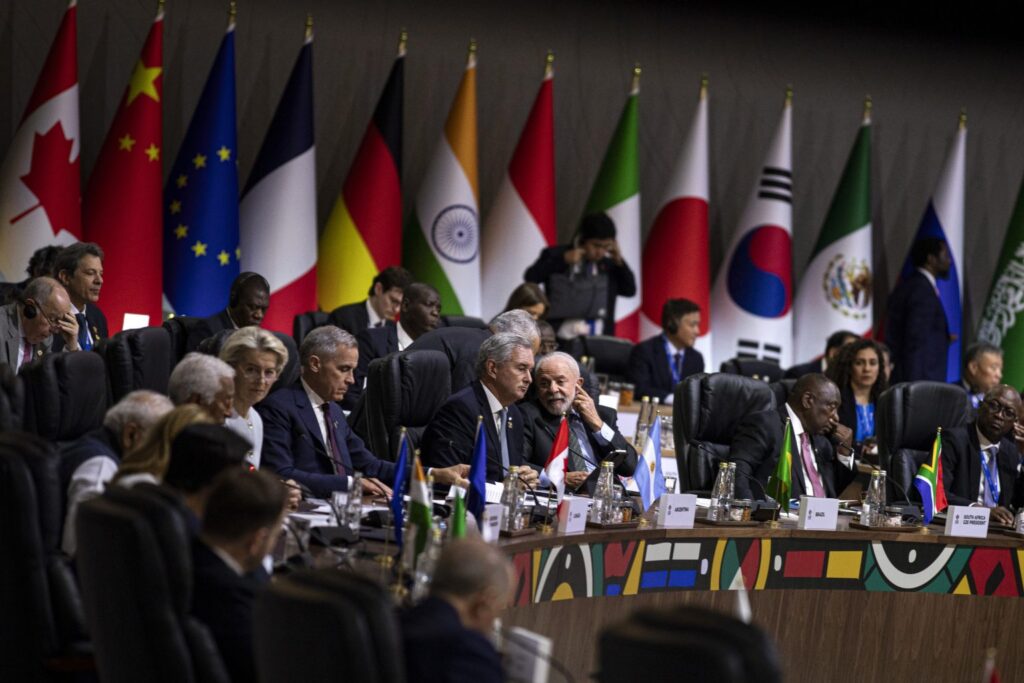
The emerging order is less about permanent camps and more about overlapping networks, and networks reward countries that can move between them.
Strategic autonomy is not unlimited. A country cannot simply declare itself independent of great-power pressure, since economic dependence, military vulnerability, technology gaps and geographic exposure can sharply constrain its options, and not every relationship can be sustained once great-power competition intensifies. Multi-alignment can also decay into transactionalism, and a state that tries to benefit from everyone may find that nobody trusts its commitments.
Read More: Special Autonomy and Subnational Diplomacy: Lessons from Yogyakarta
Autonomy therefore requires capacity as well as flexibility. Economic resilience creates bargaining space, military capability creates deterrence, diplomatic credibility creates access, and strong institutions let governments sustain complex foreign policies over time. Strategic autonomy is not the absence of dependence. It is the ability to manage dependence without surrendering choice.
The most important change may be conceptual. The question facing many states is no longer simply whether to align with Washington, Beijing, Moscow or another center of power. It is how to build a foreign policy in which relationships with those powers coexist without any one becoming determinative.
Alliances are not disappearing, since NATO remains a powerful example of enduring collective security, and not every state will balance competing relationships successfully. But the space between alignment and non-alignment is becoming politically significant, and the states occupying it are not trying to stay above great-power competition. They are learning to operate within it without being defined by it.
That may be the real significance of strategic autonomy. It is not a refusal to choose but an attempt to ensure that no single choice closes every other door. As the system fragments, diplomacy may become a contest not over who can command the most states but over who can maintain the most meaningful relationships.
For middle and regional powers, that opens a different source of influence: the power to have options when others have fewer.
*The views presented in this article are the authors’ own and do not necessarily reflect the views of The Diplomatic Insight.*

Muhammad Moez
Muhammad Moez is a final-year BS Strategic Studies student at the National Defence University, Islamabad. His work focuses on strategic narrative, civil-military relations and South Asian security. He is a member of the Pakistan Youth Parliament for the 2026 to 2027 session.